
Have you ever turned the key, expecting your diesel engine to roar to life, only to get silence or worse, a flickering dash and no crank? You’re not alone. One of the most frustrating issues diesel owners face is when the diesel ECM is not communicating with the engine.
This isn’t just a hiccup; it’s a serious problem that can bring everything to a standstill. But don’t worry, whether you’re a fleet operator or a DIY enthusiast, this guide walks you through what’s happening, what you can do, and how to fix it without unnecessary guesswork.
Let’s decode the symptoms, break down your options, and help you get back on the road faster, with confidence.
Heads Up: This guide involves working with your vehicle’s electrical system. You’ll need a reliable OBD-II/diesel diagnostic scanner and a digital multimeter. If terms like continuity or CAN bus sound unfamiliar, don’t worry, we’ll explain as we go.
Still, if you’re not comfortable testing electrical circuits, we recommend consulting a qualified diesel mechanic. Always prioritize safety before turning a wrench.
What is an ECM and Why Does It Matter?
The Engine Control Module (ECM) is the brain of your diesel engine. It processes sensor data and makes real-time decisions to optimize performance. When it stops communicating, your vehicle can’t run properly, or at all.
Key Functions of the ECM
- Regulates fuel and air mixture for efficiency
- Controls ignition and timing
- Manages turbocharging and emissions
- Monitors engine sensors for faults
- Communicates with other vehicle modules
- Stores diagnostic trouble codes (DTCs)
- Enables remote diagnostics in modern vehicles
“When the ECM goes silent, it’s like trying to drive with no steering wheel—it’s simply not going to happen.”
Diesel ECM Not Communicating with Engine
If your diesel ECM is not communicating with the engine, it’s likely due to a failed module, wiring issues, blown fuses, or software corruption. The best course of action is to diagnose the system using a scan tool, check all power and ground circuits, and if necessary, replace or repair the ECM.
When this communication failure occurs, it’s not always the ECM’s fault; other components may be involved. However, the ECM is often the core issue that needs attention.
Common Signs of ECM Communication Failure
When your ECM stops communicating with the engine, the signs may start off subtle, but they can quickly escalate into a complete engine shutdown. Identifying these symptoms early can make the difference between a minor fix and a costly repair.
Keep an eye out for unusual behavior, as even small electrical quirks could be linked to ECM issues. Recognizing the symptoms early can save you time, money, and prevent roadside breakdowns.
Warning Signs to Watch For
- No start or hard starting
- Check Engine Light remains on
- Inconsistent RPM readings
- No response from OBD-II or diagnostic tools
- Loss of fuel injection or ignition
- Unusual or intermittent electrical issues
- Dashboard lights flickering or failing
- Transmission not shifting correctly
- Cooling fans running continuously
Tip: Always start with a visual inspection of fuses and wiring before assuming ECM failure.
Step-by-Step Diagnosis
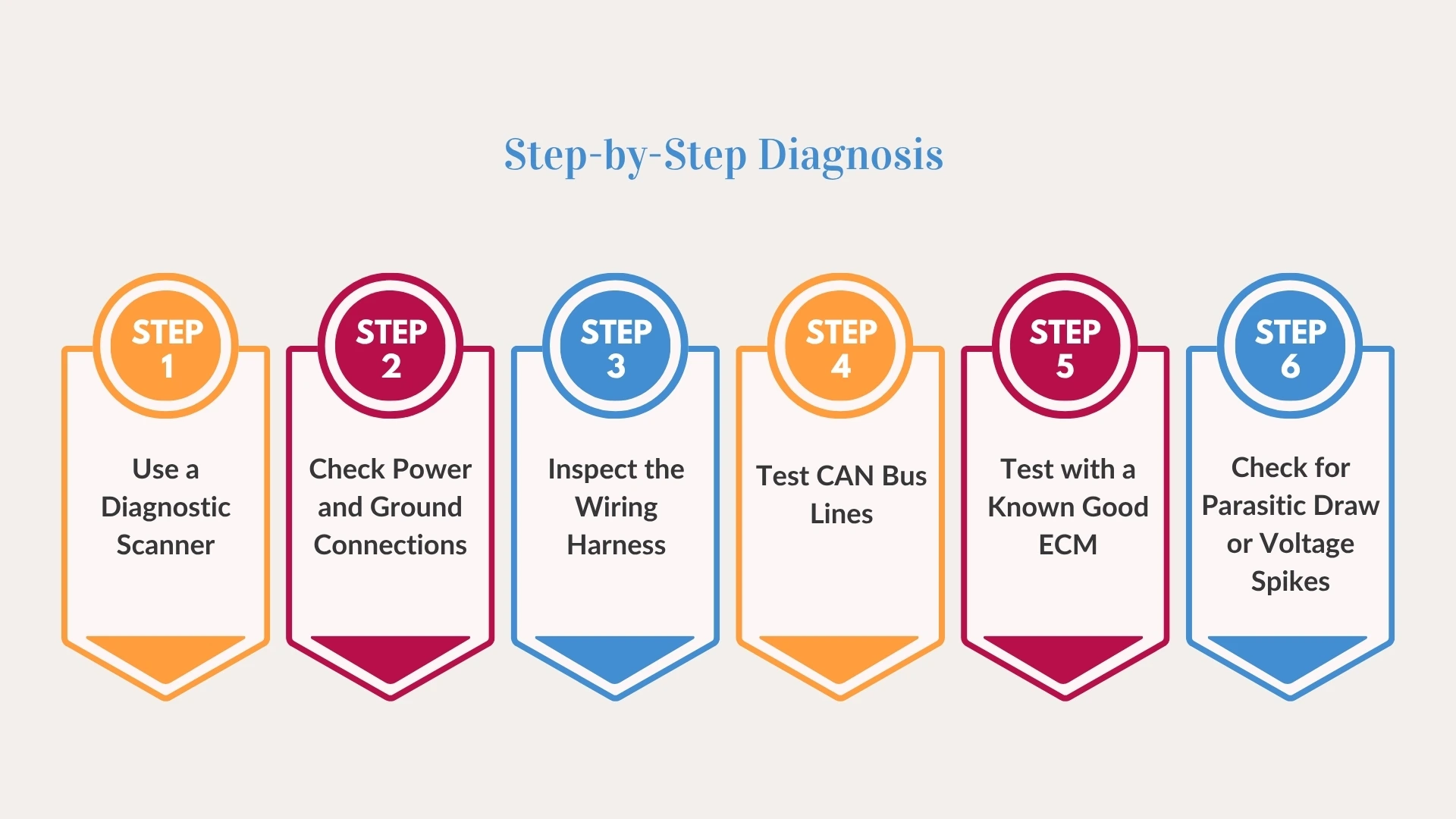
Before jumping to conclusions, follow these detailed steps to confirm the issue and avoid unnecessary part replacements. These checks will help you isolate the root cause—whether it’s the ECM itself, a faulty connection, or an external factor. Be methodical, document everything, and never skip the basics. Accurate diagnosis is the first step toward a cost-effective fix.
Step 1: Use a Diagnostic Scanner
- Plug in a reliable OBD-II or diesel-specific diagnostic scanner.
- Attempt to establish communication with the ECM.
- If the tool says “No Communication,” document that and check for other accessible modules.
- Look for related U-codes (network communication errors) that might point to ECM or CAN bus issues.
Step 2: Check Power and Ground Connections
- For Ground Continuity:
- Disconnect the battery.
- Use a digital multimeter set to Continuity or Ohms mode.
- Probe the ECM ground pins and confirm less than 1 ohm to a clean chassis ground.
- For Power Supply:
- Reconnect the battery.
- Set your multimeter to DC Volts.
- Carefully probe the ECM’s designated power input pins.
- Expect to see battery voltage (typically 12.6V or higher).
- While testing, gently wiggle the harness to detect loose or intermittent connections.
- Inspect all ECM-related fuses and relays in both fuse and relay boxes.
Step 3: Inspect the Wiring Harness
- Perform a physical inspection from the ECM to the main fuse box, ignition switch, and battery.
- Look for signs of chafing, pinched wires, rodent damage, burnt connectors, or loose terminals.
- Pay special attention to connectors that are wet, dirty, or corroded. Clean them with contact cleaner.
- Use a pin-out diagram to test individual circuits if needed.
Step 4: Test CAN Bus Lines
- Disconnect the battery and ECM before measuring resistance.
- Measure resistance between CAN High and CAN Low (should be around 60 ohms).
- Check each wire for continuity from the ECM to termination points.
- Inspect for short-to-ground or short-to-power on either CAN line.
- Use a breakout box or oscilloscope for advanced testing if the data is inconsistent.
Step 5: Test with a Known Good ECM
- Ensure the replacement ECM is compatible with your vehicle’s make, model, and engine.
- Plug in the known good ECM carefully.
- Reconnect the battery and attempt to scan for communication.
- If communication is restored and the engine starts, the original ECM is defective.
- Return the test ECM and arrange for repair or replacement of your faulty unit.
Step 6: Check for Parasitic Draw or Voltage Spikes
- Use a clamp meter to monitor for excessive amperage draw after the vehicle is off.
- Perform a voltage drop test across ground wires and major terminals.
- Observe the battery during crank and idle with a multimeter any dips below 10V could corrupt ECM operation.
- Check for alternator overcharging (over 14.7V), which could damage electronic components.
Repair or Replace Your ECM
Once you’ve confirmed that your ECM is the issue, you have two main options: repair or replacement. Choosing the right path depends on your budget, timeframe, and whether the unit is still available. Some ECMs are hard to source or discontinued, making repair the only viable route. Others may be readily available and pre-programmed for a fast plug-and-play installation.
ECM Repair Service
If you prefer to keep your original module, many shops offer a repair service. You simply ship your faulty ECM to the service center, and they diagnose, repair, and reprogram it for you.
Benefits of Repairing
- Keeps your vehicle’s original settings and VIN
- Usually more affordable than a new module
- Faster turnaround than sourcing rare modules
- Environmentally responsible
- No additional learning or programming needed post-installation
“Repairing your ECM is often the smartest move when you’re dealing with a rare or heavily customized diesel engine.”
Pre-Programmed Replacement ECM
If time is critical, go for a pre-programmed replacement ECM. These units are tested and ready to install, often customized to your engine’s specifications.
Why Choose Pre-Programmed ECMs
- Plug-and-play no need for dealership programming
- Fast shipping and installation
- Ideal for vehicles with tight service schedules
- Fully tested and configured to VIN and model
- Backed by warranty and support
Take Advantage of Core Charge Reimbursement
If you buy a replacement ECM, you can send your old (bad) ECM back for a core charge reimbursement. This helps you recover part of your investment and allows the provider to refurbish the original unit for future use.
Quick Tips
- Always return your core in the original packaging
- Remove any loose debris or damage before shipment
- Label it properly to avoid delays
- Include your return form and tracking number
- Ship within the return window (typically 14-30 days)
Why This Happens More in Diesel Engines
Diesel engines operate under higher compression, use more sensors, and often face harsher environmental conditions than gas engines. This increases stress on electronic components like the ECM.
Common Diesel-Specific Causes
- Vibration and thermal cycling damage solder joints
- Exposure to fuel, oil, or moisture degrading PCB coatings
- Corrupted programming due to voltage spikes
- Overloaded wiring systems in high-demand applications
- Inadequate grounding or corroded connectors
- Poor aftermarket tuning or flash programming
Preventive Measures to Avoid ECM Issues
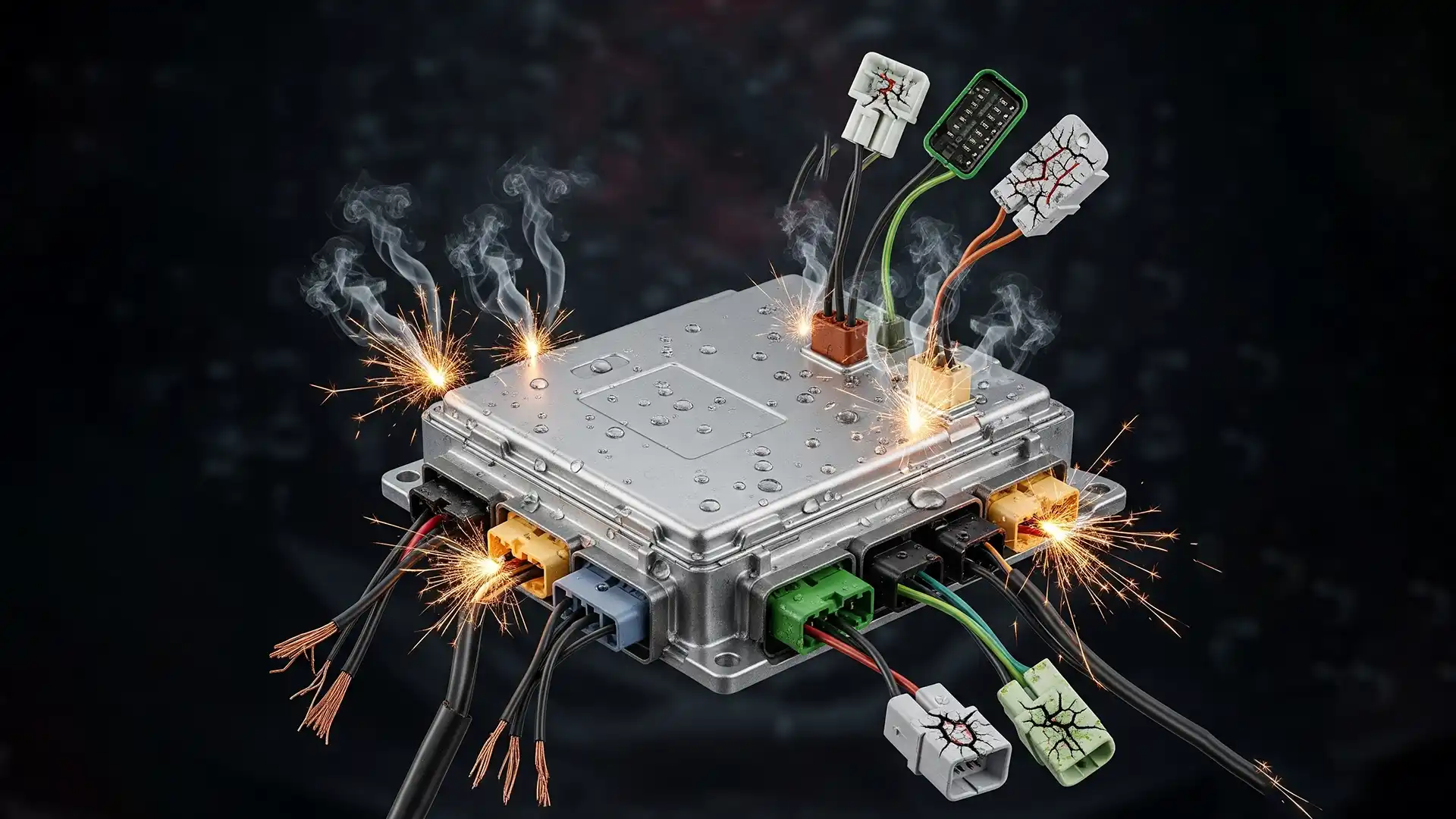
You can’t always stop a module from failing, but you can reduce the chances.
Maintenance Tips
- Keep electrical systems clean and dry
- Inspect and protect wiring looms regularly
- Avoid jump-starting with low-quality cables
- Use surge protectors when plugging in diagnostic tools
- Don’t ignore minor check engine lights or error codes
- Regularly test battery health and alternator output
- Mount ECM units securely to prevent vibration damage
Remember: Preventive care beats reactive repair every time.
What to Expect After Replacement or Repair
Once you’ve replaced or repaired your ECM, it should restore normal operation if the original failure was isolated. Most units come with a short warranty and installation guide.
Post-Installation Checklist
- Confirm communication with your scan tool
- Check for and clear any remaining fault codes
- Road-test the vehicle under normal conditions
- Monitor for any intermittent faults over the next few days
- Keep your receipt and warranty information
- Check other modules for communication errors
- Reset learned parameters if required
- Perform throttle and idle relearn procedures if recommended
Where to Get Help
If you’re unsure whether your diesel ECM is the problem or you’re stuck without communication, professional help is available. A reliable ECM service provider will offer:
- Pre-programmed replacement modules
- Core charge reimbursements
- Repair and reprogramming services
- VIN-matched configurations
- Technical support and installation assistance
One such trusted provider is Diesel ECM Exchange, a leading expert in diesel ECM, ECU, and FICM solutions. Whether you’re in need of a high-quality pre-programmed replacement or want to repair and reprogram your existing module, they’ve got you covered.
Why Choose Diesel ECM Exchange
- Fast turnaround times with ready-to-install modules
- All units are tested and pre-programmed to your VIN
- Full core charge reimbursement when you send in your original unit
- Trusted by fleets and diesel owners nationwide
- Backed by expert support and a commitment to quality
“When your ECM fails, you don’t just need a replacement—you need peace of mind. Diesel ECM Exchange delivers both.”
Visit dieselecmexchange.com to explore your options and get back on the road with confidence.
Concluding Words
When your diesel ECM is not communicating with the engine, it can feel like you’re in the dark, but you’re not alone. With the right diagnostic steps, repair or replacement options, and some professional help, you can fix the issue quickly and affordably. Whether you opt for a repair service or a pre-programmed replacement module, there are trusted solutions that can get your diesel engine back to work.
Don’t let a silent ECM keep your engine quiet. Take action, choose smart, and drive on.